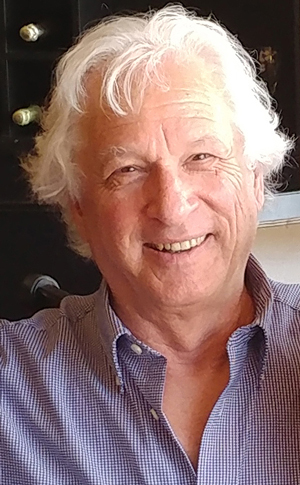
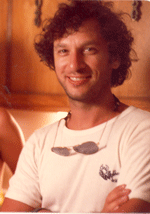
Allen R. Kates, MFAW
Background
I love writing for other people, and helping them express the depths of their traumatic experiences, feelings, conflicts, hardships and ideas.
And I feel that my life has prepared me for ghostwriting memoirs, life stories, family histories, autobiographies, biographies, self-help, current affairs, psychology, sociology and history books as these forms require, in addition to exceptional writing skills, a background rich in diverse experiences, travel in other lands, sharing food and ideas with people of different cultures, jobs, traditions, and beliefs.
The following biographical sketch may be more than you wish to read, but if we are to work together on your story, and I am to dig into the details of your life, I think you need to know as much about me as possible.
Biographical Highlights—
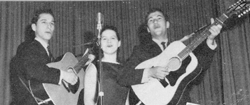
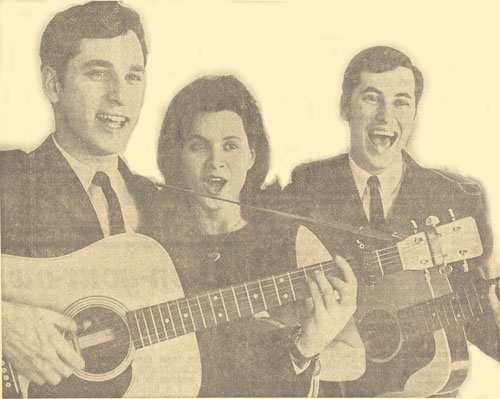
While attending high school, at age 16, I began a 4-year odyssey as a member of a folk-singing trio called the Villagers 3, performing at many events, on television shows, radio and in folk music clubs. I attended school during the week, but on weekends I morphed into Bob Dylan. I wish...
L-R, Allen Kates, Sheila Sulman, Mark Stone L-R, Allen, Sheila, Mark L-R, Mark, Sheila, Allen
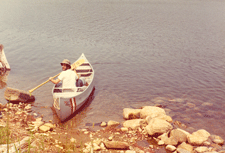
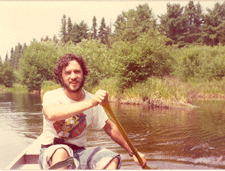
During summers, I continued folk singing as a counselor at a camp in the Adirondack mountains of northern New York state, but adopted yet a new persona: canoe tripper.
I often taught young campers how to canoe and survive on the camp's island for several days at a time.
In my late teens, I canoed and portaged in northern Ontario’s
Algonquin Park where the mosquitoes were the size of eagles.
Years later, I attempted the ultimate wilderness adventure by embarking on a two-week white-water canoe trip north of Lake Superior.
A friend and I were dropped off with our canoe by a seaplane in the middle of nowhere and we wondered what we had gotten ourselves into. Despite cracking the metal canoe in half against a huge rock while running rapids, we survived.
At 17, I produced and wrote my first television story that was aired on the CBC television network. At 19, while studying journalism, television, and film at Ryerson University, I wrote my first magazine article (co-written with fellow student Mark Stone, a future documentary filmmaker), and it was published by a major media outlet.
When I was about 20, I backpacked through Europe. With 5 years of high school French, I got by. And in Italy, when I got hungry, I quickly learned the basics of their language. Certainly the word for pasta.
On the Greek island of Crete, I got off a bus in a small fishing village, knocked on somebody’s door, asked for a room, and stayed for two months. The family adopted me, taught me their culture, and showed me off at the local taverna.
Ouzo became a new word in my vocabulary. As I didn't drink, I had to find creative ways to dispose of the liqueur without insulting my hosts. My new Greek handmade boots worked just fine.
What I didn't know was that this idyllic, picturesque town was used as a prison for political dissidents opposed to the dictatorial regime at the time. I talked to people who had been tortured and then exiled there, never to leave or contact their loved ones again. The local police began interrogating people about why I was asking so many questions, and I decided it was time to depart.
Back in Canada, I attended the University of Windsor where, among other things, I studied playwriting, directed several plays, built scale models of sets, and began reading in French. Soon I became a television journalist for the CBC and CTV television networks.
 Along with 3 other young people, I became the host of a weekly one-hour television network current affairs program. We were the youngest producers/directors/writers/hosts ever and filmed stories across the country.
(Allen is 2nd from the front)
During the next 14 years, I produced, directed and wrote documentaries and current affairs programs throughout the United States and Canada.
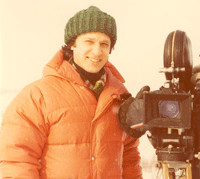
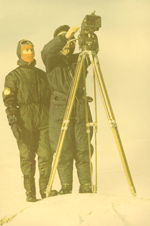
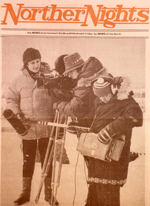
As a journalist, I was welcomed into the homes of Eskimos on Baffin Island, rode a fishing boat for three days in Newfoundland while filming Humpback whales, and produced stories about child kidnapping, a jail fire that killed 21 prisoners, fraudulent home construction, and medical malpractice.
I did stories on mortgage rip-offs, a child set on fire by teenagers, 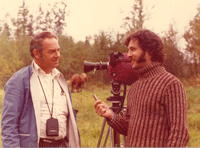
discrimination against indigenous people, police brutality, hot air balloons, the struggles of people in wheelchairs, squid fishing, famous writers, insurance fraud, prejudice against police women, and hundreds of other stories.
On the personal front, I renovated a three-story house in Toronto, learning the joys and pitfalls of woodworking, plumbing, wiring, drywalling and cement work. For fun, I skied. I enjoyed the sport, but my style resembled that of an angry chicken flapping its wings.
I became the Head of Production for a television station in Vancouver, BC, responsible for 26 hours of original programming every week, including current affairs, music shows, documentaries, and talk shows, and supervised a staff of 65 producers, production assistants, program hosts and writers. I was told that it only rained in Vancouver during the winter. For the two years I was there, it rained every day. I gave up using an umbrella.
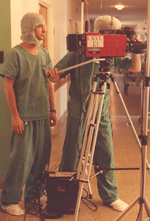
But I couldn't resist producing stories, like the one filmed at a hospital about a new technique for restoring hearing to a patient's ear. I had not imagined there would be so much blood. The production assistant fainted.
I went on to produce a CTV network children's show called Just Kidding, and Dinah Christie Presents, a variety show taped across Canada. Before long, I was hired b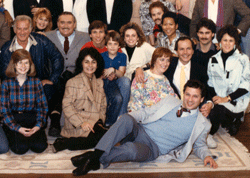 y 20th Century Fox Film Corporation in Hollywood as a story development executive. For several years my job was to find and collaborate with writers, and analyze screenplays and television treatments.
 "Mr. Belvedere," ABC television show
Another part of my job was to meet every literary agent in Los Angeles and take them out to fancy restaurants. I gained so much weight that one day just before a lunch appointment, I bent over and split my pants. My secretary called Wardrobe and they rushed over and sewed me up.
While in Hollywood, I attended many writing seminars, began privately coaching writers, and edited and rewrote their screenplays.
Eventually tired of the Hollywood scene, I decided to write a book about psychological trauma and Posttraumatic Stress Disorder (PTSD). To begin, I prepared myself by studying physiological psychology, the Brain and Behavior, at UC Santa Barbara.
As a way of acquiring firsthand knowledge in the field, I worked as a counselor with a dozen residents of a group home who were diagnosed with mental illness and drug or alcohol addiction. All had PTSD. The program director helped train me in mental health issues and empathy techniques. In particular, I used humor to defuse situations and get cooperation.
Through the International Critical Incident Stress Foundation, I earned certificates in trauma, stress and crisis management, as well as suicide intervention.
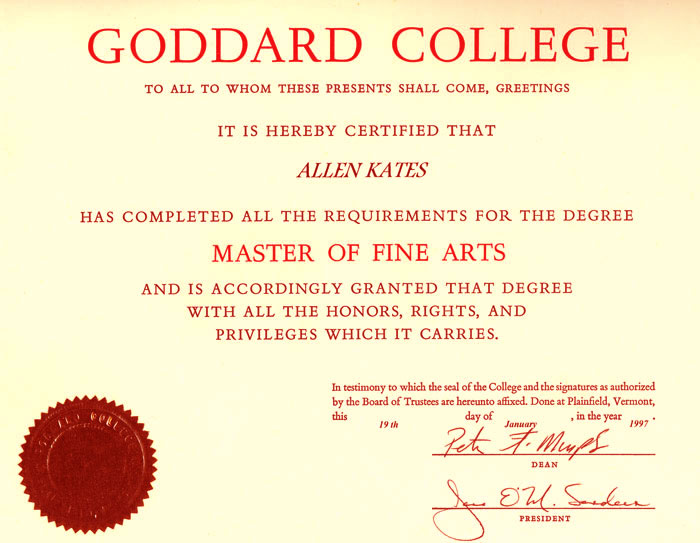
To learn how to write a book, as a book is a different creature than a newspaper story or magazine article, I studied creative writing at Goddard College in Vermont, and earned a Master of Fine Arts in Creative Writing degree (MFAW).
Goddard was boot camp for writers and it was the best two years I’ve ever spent, under the stewardship of several successful New York City writers. To earn the degree, I had to write a publishable manuscript.
After interviewing more than 200 police officers and going on ridealongs throughout the US and Canada, I settled down to write a book about police trauma while living on a working cattle ranch in the mountains of Arizona.
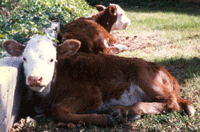
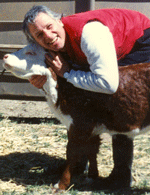
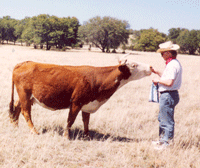
From my kitchen window, I could see mountains in Mexico. I mingled with ranchers, attended cattle drives, and raised two orphaned calves named Guinevere and Lady Godiva.
L-R, Guinevere, Lady Godiva
They grew into 1,200 pound Hereford cows, and from the beginning were pets that we hugged, brushed and kissed. We took them for walks, fed them potato chips as a treat, and they lived out their lives in freedom.
The Copper State Chronicles television show produced a feature story on the cows, and a newspaper did a front page cover story.
Shows you what’s important in the Old West.
After a while, my manuscript became a 480-page book called CopShock, Surviving Posttraumatic Stress Disorder (PTSD), and became a bestseller, read in more than 9 other countries. 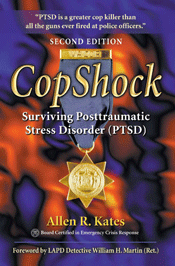
After numerous printings, it is now in its second edition. 
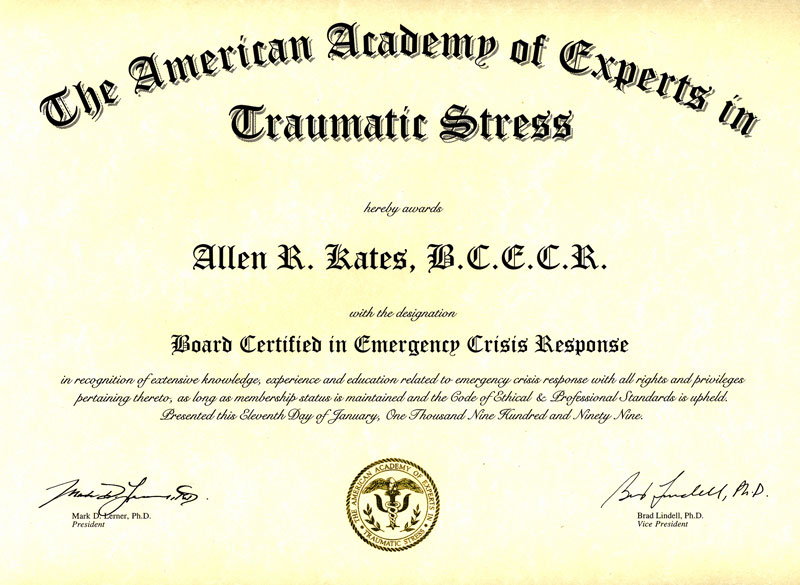
Just before the book was published, the American Academy of Experts in Traumatic Stress granted me board certification with the designation Board Certified in Emergency Crisis Response (BCECR).
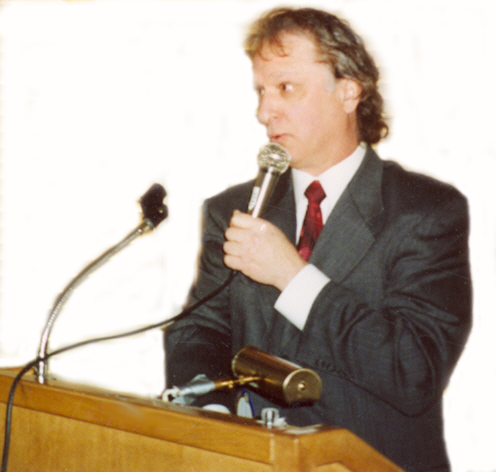
As a result of CopShock, I traveled throughout the United States, giving seminars about the symptoms of PTSD and how to combat them. The military publisher, Janes, invited me to the Netherlands to speak to police departments  from all over Europe, and the A&E Television Network produced a documentary titled Cop Counselors based on the book that is still shown in police academies today.
9/11
Three weeks after terrorists destroyed New York's World Trade Center towers and murdered more than 3,000 innocent people on September 11, 2001, I was asked to give a PTSD seminar to New York Port Authority police officers and peer support officers.
But before I was allowed to give the daylong training, I was required to spend half a
day wandering through the devastation.
At the end of the tour was a makeshift memorial in a gazebo, with notes taped to
wooden posts. I tried to straighten out a note written by a child wondering where
his daddy was and began to weep uncontrollably.
The director of the program who had invited me to New York told me that now I was ready to speak to the officers.
Since CopShock was published, I have given seminars on PTSD, suicide, post-shooting trauma, vicarious traumatization, and resiliency techniques to organizations such as the National Guard Bureau, the Arizona Department of Veterans Affairs, the Association of Traumatic Stress Specialists, the Commission on Accreditation for Law Enforcement Agencies, Janes' Police Conferences, Creative Health Care, the Sacramento Law Enforcement Chaplaincy, the Spokane Washington Police Department, the Southern Arizona Law Enforcement Training Center, and the Women Leaders In Law Enforcement Training Symposium (WLLE).
In Tucson, AZ, I attended 8 weeks of training in empathy techniques and police procedures, and became a volunteer advocate for the Pima County Attorney's Office Victim Witness program. On the nightshift, I worked with a partner helping victims and survivors of armed robberies, beatings, rapes and murders. Sometimes we delivered food baskets to needy families.
For many years, I have conducted writing workshops with courses in creative writing, memoirs, novels, self-editing and screenwriting. At the same time, I coached other writers on their manuscripts, edited their work, and, in some cases, totally rewrote their book manuscripts. In most cases, my relationship with the author remained confidential.
However, some authors request that my name be included on their book covers as a marketing tool because of my own book success.
For instance, I ghostwrote a 288-page book called Gifts My Father Gave Me, Finding Joy After Tragedy by Sharon Knutson-Felix, Executive Director of the 100 Club of Arizona.
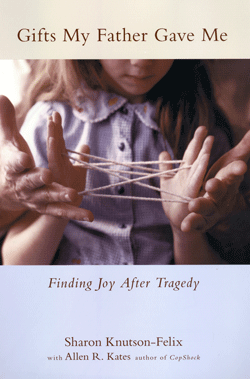 In her book, Sharon tries to make sense of the loss of
her 6-year-old son, and police officer husband, and helps
other people cope with grief and loss. "Allen took my own words and put
them on paper. Allen has a talent
beyond anything you can learn in a
book. He has a way of connecting
with your soul and helping you put
your heart on paper. I recommend
his services to anyone who is
wanting to write a book and not
able to get there on their own.”
-Sharon Knutson-Felix, author of
Gifts My Father Gave Me
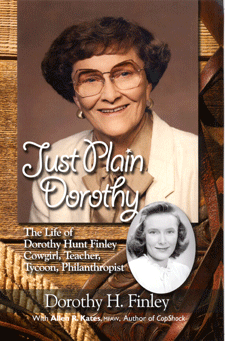
Another book I ghostwrote where my name is included on the cover is a 400-page historical memoir for well-known Arizona icon Dorothy H. Finley. Titled Just Plain Dorothy: The Life of Dorothy Hunt Finley, Cowgirl, Teacher, Tycoon, Philanthropist. The book has become a huge success.
"I love this book, I love this book..."
-Dorothy H. Finley, author of Just Plain Dorothy
Contact Allen
To estimate your costs and how long your book may take to write, please contact me. Your consultation is free and everything we discuss is confidential. Click here to connect.
Allen Appears in Television Podcasts
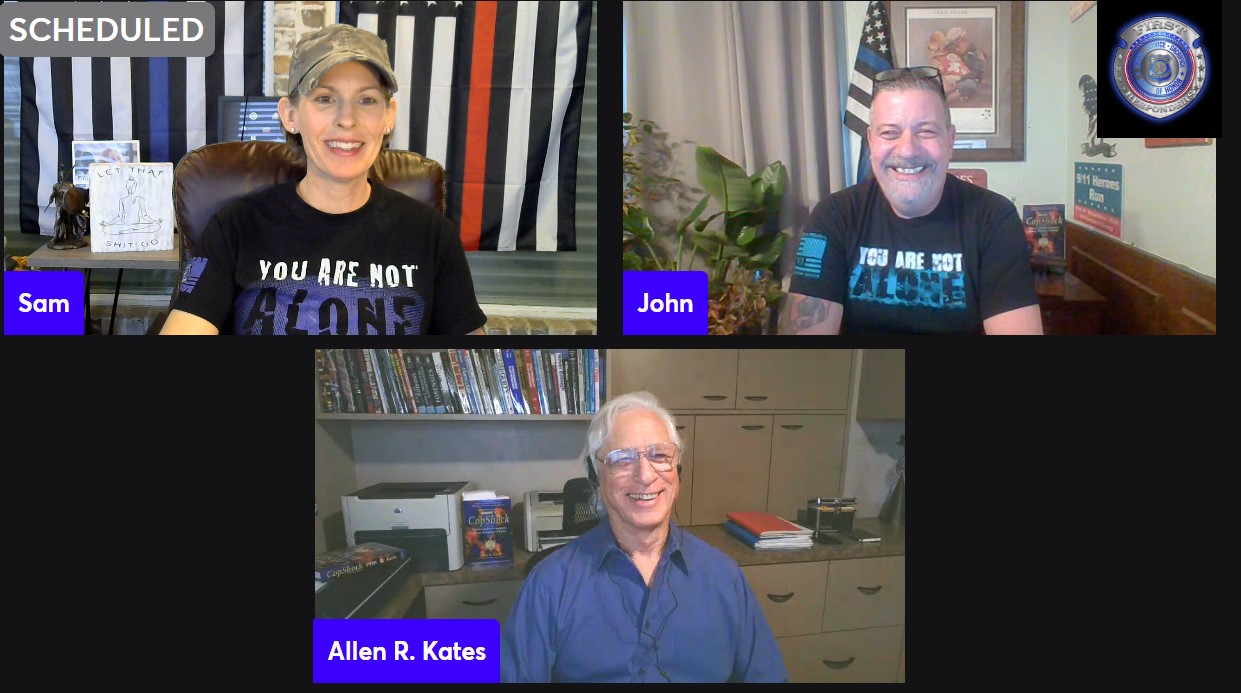
A Badge of Honor podcast Jan. 2, 2023
Featuring Allen R. Kates, author of CopShock,
with host Samantha Horwitz, former US Secret Service Agent, and host
John Salerno, Retired NYPD detective and firefighter. Running on
numerous social media outlets continuously including YouTube.
Allen is also featured on the Responder Resilience Podcast video
Starting Sept. 21, 2022. https://www.youtube.com/watch?v=TAh6gtLT7kU
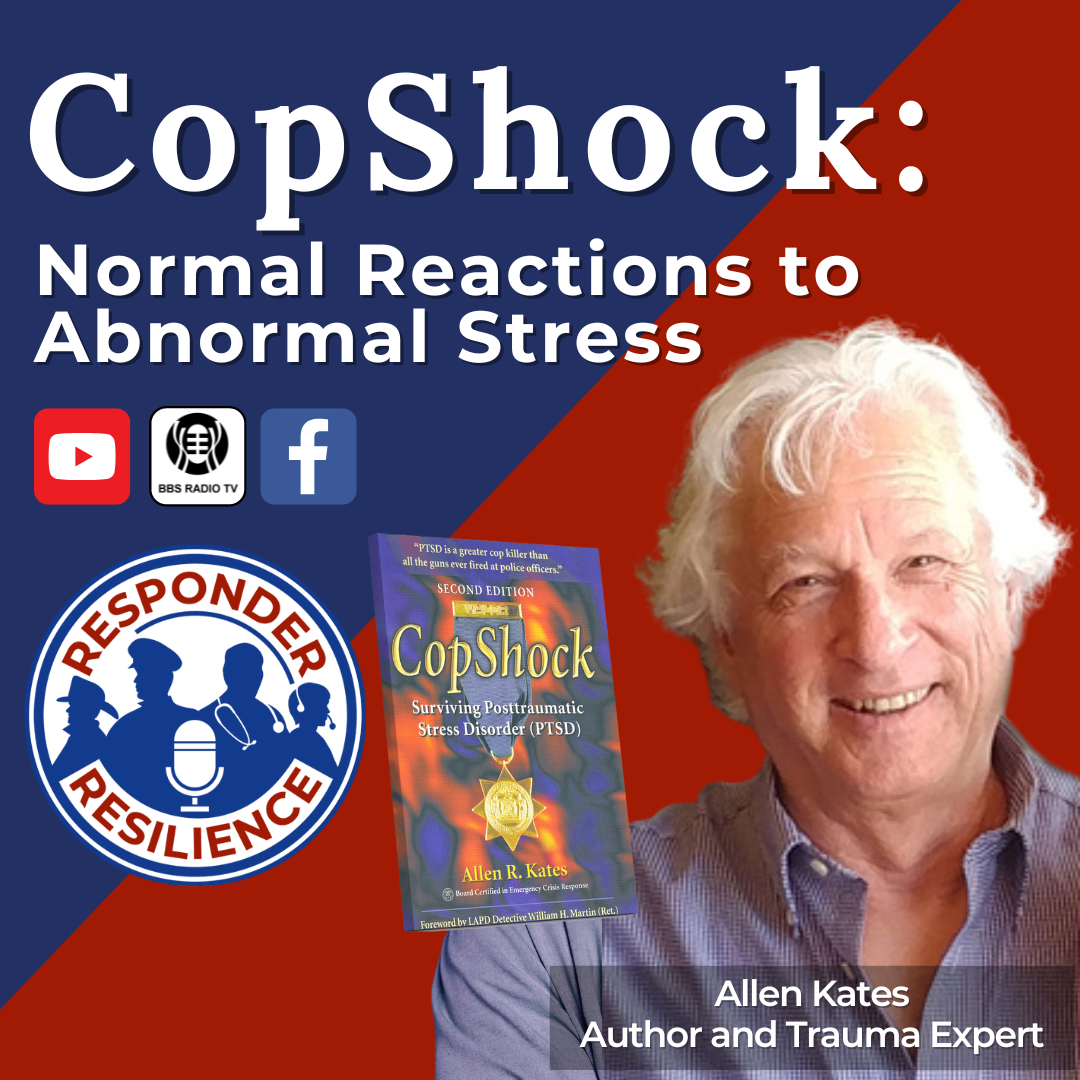
CopShock: Normal
Reactions to Abnormal Stress
Featuring Allen Kates,
Author and Trauma Expert
In this episode,
we’ll be speaking with trauma expert and author of the book CopShock, Allen
Kates, about Posttraumatic Stress Disorder (PTSD), and how to survive it by
employing resiliency techniques.
CopShock is a
go-to trauma and stress survival book. This book is a great source of knowledge
for anyone who is interested in learning about the different types of trauma
and stress, as well as how to deal with them on the job and in your daily life.
Allen Appears in Television Interview, Proud To Serve
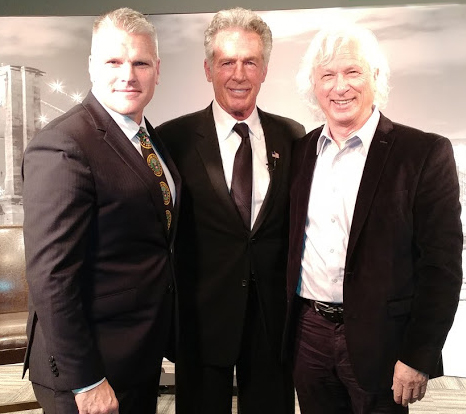
Right--Allen R. Kates, after appearing on Proud To Serve, RAD-TV, June 2019
Left--AJ Ferrio, Chief Warrant Officer, U.S. Army. www.BrothersInArmsWorldwide.org
Middle--Jack Scalia, Host and Interviewer, Proud To Serve
Allen's interview is now airing in multiple venues
on television, podcasts and on the Internet.
Please click on this link:
https://c-suitenetwork.com/tv/video/proud-to-serve-with-jack-scalia-author-allen-r-kates/Allen on BoomGoddess Radio Podcast 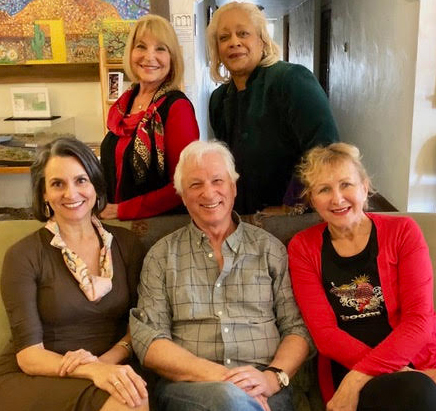
Allen R. Kates with Lori DiGuardi on BoomGoddess Radio show, 2018
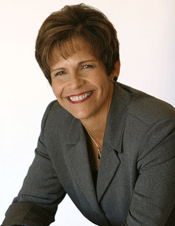
Back, L--Andrea Gould-Marks, Ph.D., R--Jennifer Davis-Paige
Front, L--Lori DiGuardi, M.S., ACC, Guest Speaker and Author
Front, R--Barbara Peters, MBA
Police PTSD Video Series
Allen is featured in 4 episodes of this new Police PTSD video series:
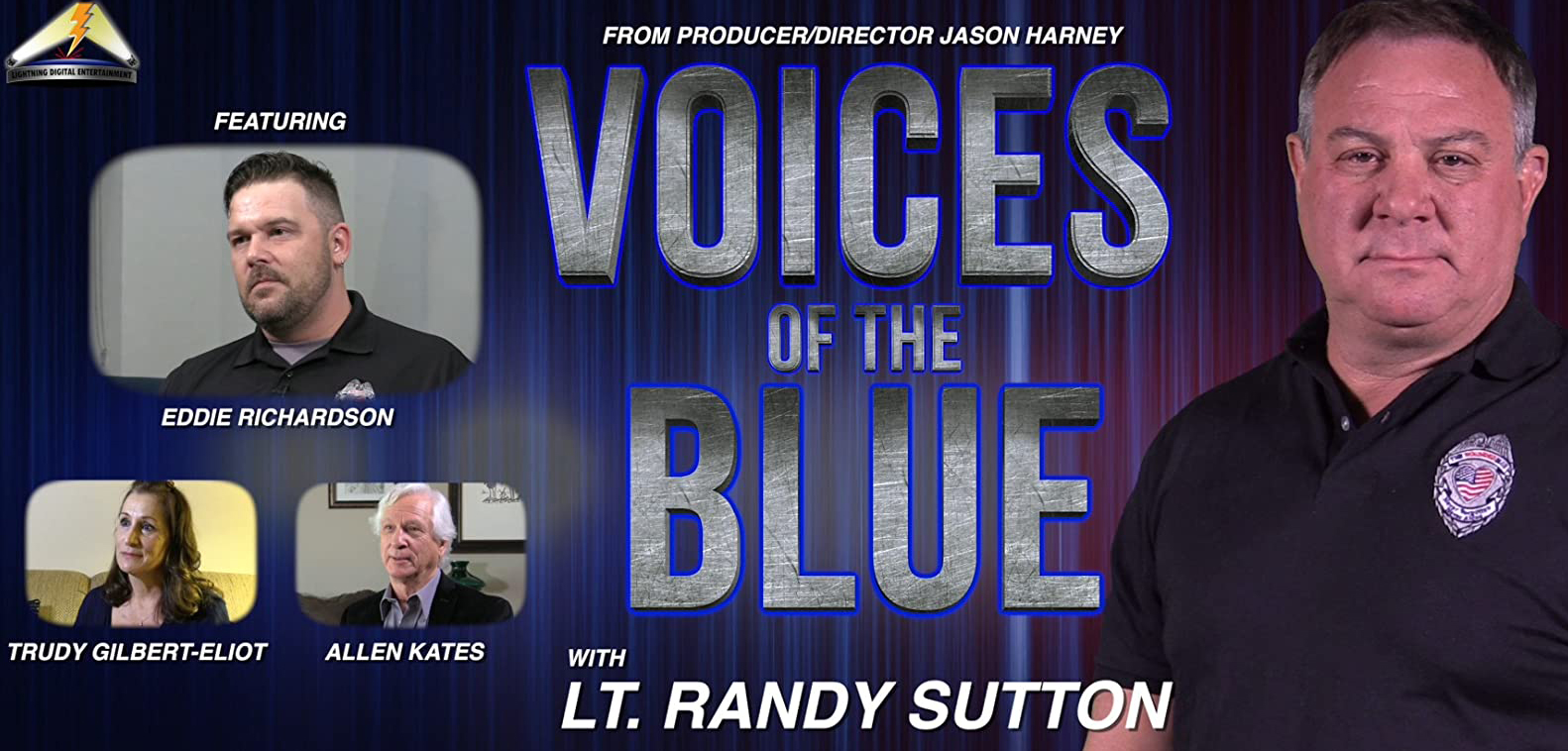
Hosted by the CEO and Founder of The Wounded Blue Organization, Lieutenant Randy Sutton, "Voices of the Blue" features the true stories of our Law Enforcement Officers and their experiences after becoming physically and mentally injured in the line of duty. As told by the Cops themselves, the series explores the consequences of trauma incurred when the aftermath of a critical incident leaves these heroes to cope with their injuries alone, often abandoned by their agencies and sent in a downward spiral where they lose everything that matters most.
To Top of Page.